Cartagena isn't one city. It's a walled old town, a party barrio next door, a peninsula of towers facing the sea, and a couple of residential areas nobody shows tourists. Here's the honest guide, neighbourhood by neighbourhood, including the parts the listings leave out.
How the city is laid out
Almost everything you came for fits into a small slice of Cartagena. The Centro Histórico, inside the walls, is the colonial core of balconies, plazas and restaurants. Directly next to it, across one avenue, sits Getsemaní: same size, different energy, louder and more street-level.
From there the coast runs southwest along a long, narrow peninsula: Bocagrande, a strip roughly 3 km long with sea on one side and bay on the other. At the far tip is El Laguito. Tucked behind it, facing the bay, is the residential neighbourhood of Castillogrande.
In the other direction, between the old city and the mainland, lies the island of Manga: republican-era mansions, the marina, and everyday Cartagena. Six areas, six different trips. Choosing wrong won't ruin your holiday, but it will change the rhythm of every single day.
Centro Histórico: the postcard, at a price
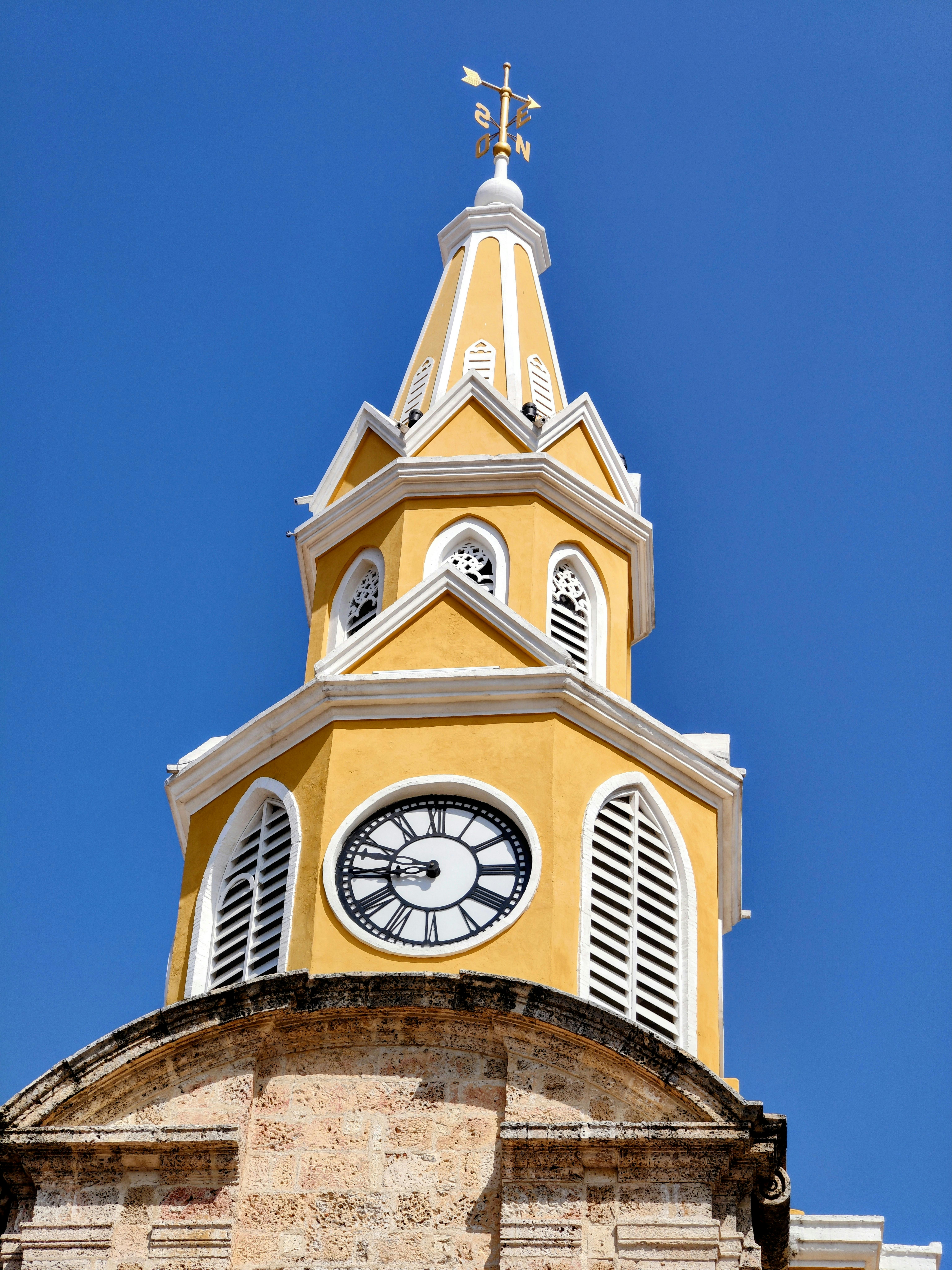
This is the Cartagena you saw in photos: bougainvillea over wooden balconies, plazas that fill up at dusk, the best restaurants and bars in the city on foot. If it's your first visit, you're here five days, or you're travelling as a couple and want to step outside and already be in it, this is your neighbourhood.
What the listings don't say: it's probably the most expensive square metre in Colombia. And it is genuinely noisy near Plaza Santo Domingo, Plaza San Diego and Calle del Arsenal. The bars don't close early and colonial walls insulate nothing.
There's also no beach. Ordinary supermarkets are scarce, so daily groceries cost more or mean leaving the area. Touting on the street is persistent. And apartments tend to be small, inside heritage buildings with weak lifts and unreliable air conditioning.
Getsemaní: murals, street life, volume up
Fifteen years ago nobody sent visitors to Getsemaní. Now it's murals, Plaza de la Trinidad packed by nine at night, hostels, small bars, and gentrification moving block by block. If you're travelling young, solo, or you want nightlife you can walk to, you'll have a good time here.
It is the loudest of the six. La Trinidad is an open-air party most nights and the sound comes through any window. The outer streets are rougher, the quality of accommodation swings hard from one block to the next, and there's no beach.
Bocagrande: the working city, with the beach at the door
Bocagrande is where Cartagena actually lives and works: a strip of high-rises with beach on one side and bay on the other. It has exactly what the walled city lacks. Real supermarkets (Éxito, Carulla, Olímpica), pharmacies, clinics, and sand a block or two away.
Your money also goes further. For what a small Centro apartment costs you get something bigger, with a pool and air conditioning that works. For families and longer stays it's the easier call, in our experience.
The downside: visually it's a wall of unremarkable towers, nothing like the old city. The beach is mediocre (more on that below). Av. San Martín clogs up daily and carries a lot of touristy chain dining.
El Laguito: the tip, the sand and the vendors
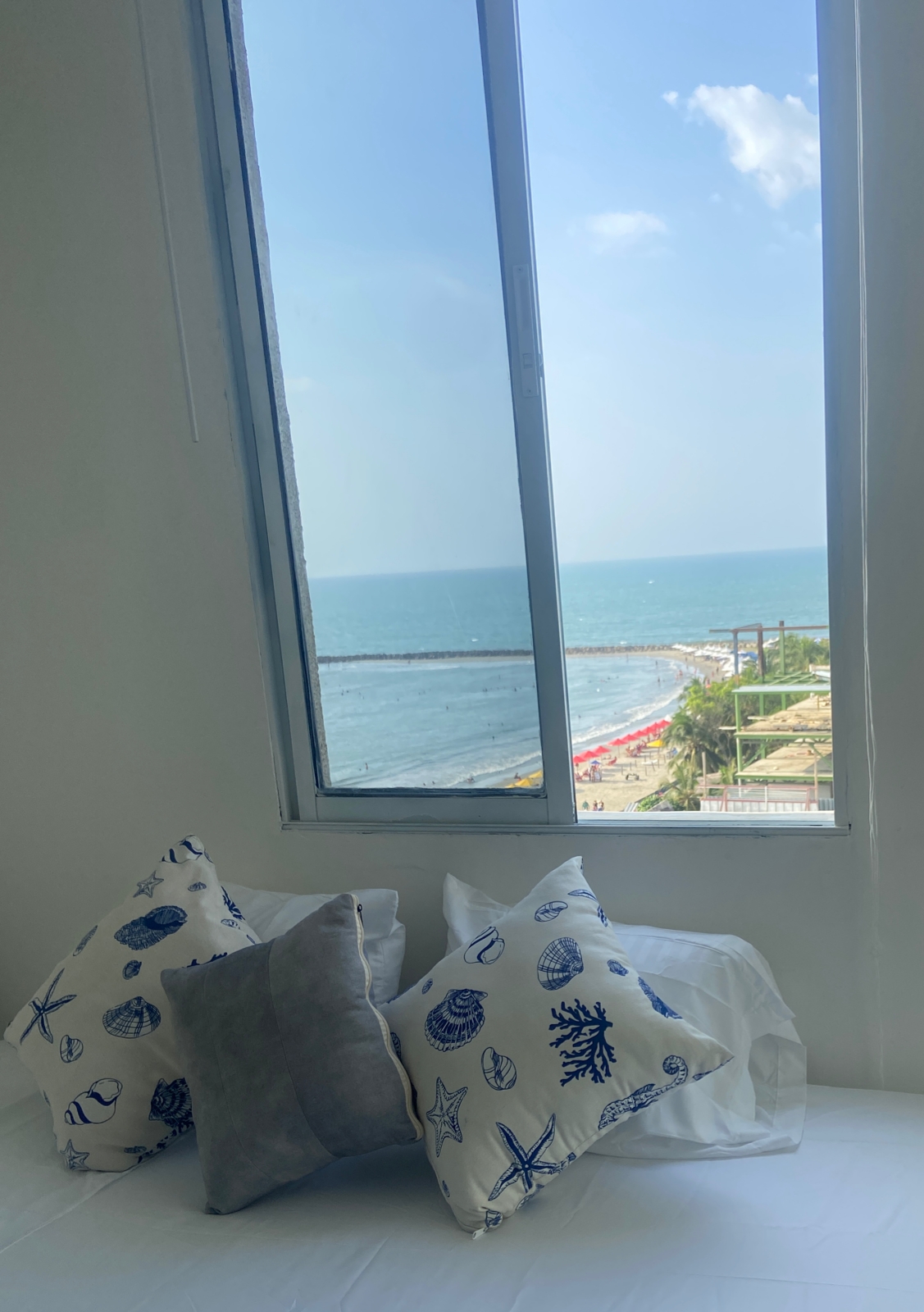
El Laguito is the narrow spit at the end of Bocagrande. It's quieter, more enclosed, full of older resort towers and beachfront units where you leave the building and step onto sand. If your trip is about being at the beach rather than negotiating the city every day, it works.
It's also as far from the walled city as you can get, has one road in and out, and several buildings are visibly ageing. It carries the heaviest beach-vendor pressure in the city: massages, oysters, bracelets, sunglasses, on a loop.
Castillogrande: calm, to the point of dull
Behind Bocagrande, on the bay side, Castillogrande is upper-middle-class residential: leafy, calm, with a bayside path for walking or running at dawn, and neighbours who aren't tourists. For families, long stays and remote work it's among the best options in the city.
Two honest warnings. At night it's quiet to the point of dull, with few restaurants. And its water frontage faces the bay: it is not a swimming beach, however good the sunset looks from the path.
Manga: the best value per peso
Manga is an island of old republican mansions beside the marina, between the old city and the mainland. It stretches a budget further than anywhere else and feels most like living in Cartagena rather than visiting it. Good for long budget stays and repeat visitors.
No beach, limited restaurants, a taxi for almost everything, and parts of it are visibly workaday with nothing postcard about them.
Which area suits you?
- Family with kids: Bocagrande or Castillogrande. Supermarket, clinic, pool and space.
- Couple, first trip, 4–5 nights: Centro Histórico or Getsemaní. You overpay, but you walk to everything.
- Nightlife on foot: Getsemaní, or the Centro near El Arsenal. Accept the noise; it's part of the deal.
- Long stay (two weeks or more): Bocagrande, Castillogrande or Manga. Cooking and grocery shopping change the maths.
- Remote work: Castillogrande or Bocagrande. Stable internet, quiet daytimes, decent coffee nearby.
- Tight budget: Manga, or Getsemaní if noise doesn't bother you.
Cards on the table: 77Rentals apartments are in Bocagrande and El Laguito, which is exactly what we'd recommend for families, beach-first trips and longer stays. If you're here four nights, for the first time, and you want to walk home from a bar at 2 a.m., the Centro or Getsemaní will serve you better, and we'll tell you so.
Getting between neighbourhoods
Distances are short but deceptive, because "Bocagrande" is a 3 km strip and it depends where you mean. From the Torre del Reloj to the near, northern end of Bocagrande is roughly 2 km, about a 25-minute walk along the seafront. To the tip of El Laguito it's roughly 4.5–5 km, about an hour on foot, so most people take a taxi.
By car it's about 10–15 minutes off-peak and 25–35 at peak. The bottleneck is always Av. San Martín. Treat those as approximate: Sunday at 7 a.m. and Friday at 6 p.m. are different cities.
The TransCaribe BRT charges COP $3,900, set by Decreto 017 of 15 January 2026 and in force since 23 January 2026 (up from $3,400). There's a reduced fare for students, people over 62 and people with disabilities registered in Sisbén A or B. Feeder routes towards Bocagrande changed in 2026, so check transcaribe.gov.co before planning a journey around them.
What the beaches are really like
This is the most common disappointment, so here it is plainly: the sand at Bocagrande and El Laguito is grey to brown, and the water is usually murky rather than turquoise. It's a bay, with river sediment and port traffic. Fine for a swim and a sunset. Not the postcard.
The white sand and clear water are at Playa Blanca (Barú) and the Rosario Islands, a day trip away, inside or at the gate of Parque Nacional Natural Corales del Rosario y de San Bernardo. Accident and assistance insurance is mandatory for park visitors under Resolución 273 of 2024, at COP $8,800 per visitor. Playa Blanca is beautiful but crowded and heavily vended; the outer islands are calmer.
City beaches are legally zoned: a zona activa at the water's edge for free transit, a zona de reposo for chairs and tents, a zona de transición, and a zona de concesión for licensed kiosks. Vendors are either informal or carnetizados, meaning ID-carded and organised in associations, and Bocagrande's kiosks are licensed. Deal only with carded vendors and licensed kiosks, and agree a price out loud in pesos before you accept anything.
If you're taking a boat, look at the flags: DIMAR, the maritime authority, runs the green (safe), yellow (caution), red (prohibited) system, and it governs whether boats sail at all. A red flag isn't something to negotiate with a boatman.
Safety, in practical terms
The UK FCDO does not advise against travel to Cartagena. That said, the risk worth naming is drink spiking, including scopolamine. The British Embassy reports criminals using drugs in food, drinks, cigarettes and even flyers, and many incidents involve dating apps. Meet in public, never leave a drink unattended, and never accept one from a stranger.
Before you book
Decide the rhythm of your trip first, the neighbourhood second. If your days will revolve around restaurants, plazas and bars, pay the Centro premium. If they'll revolve around a pool, the sea and cooking something at home, Bocagrande or El Laguito will give you far more for the money.
One thing that confuses visitors: every formal accommodation in Colombia asks for your passport for the guest register. That's not an odd request from your host, it's the rule. Prices and fares here are approximate as of 2026 and do change, so confirm with the official sources before you fly.