Barranquilla Carnival 2027 runs from Saturday 6 to Tuesday 9 February. Here is what happens each day, how the grandstands work, and how to plan it from a base in Cartagena or Santa Marta.
Plenty of sites still say Barranquilla Carnival is "mid-February", and people arrive a week late. In 2027 it comes earlier: the official calendar of the Fundación Carnaval de Barranquilla lists Saturday 6, Sunday 7, Monday 8 and Tuesday 9 February. If you are planning the start of your year, here is how to do it.
When is Barranquilla Carnival 2027?
6 to 9 February 2027. The carnival takes place over the four days before Lent. Because Easter 2027 falls in late March, Ash Wednesday is 10 February, which is why the carnival lands so early this year.
The detailed 2027 programme was not yet published when we wrote this (October 2026). The four dates are official; exact times, prices and venues for each event need to be confirmed at carnavaldebarranquilla.org and the foundation's channels as the date approaches.
What happens on each day?
- Saturday, Batalla de Flores. The central parade, led by the Carnival Queen, with floats, comparsas and dance groups. The first Batalla de Flores was held in 1903, and today it runs along Vía 40.
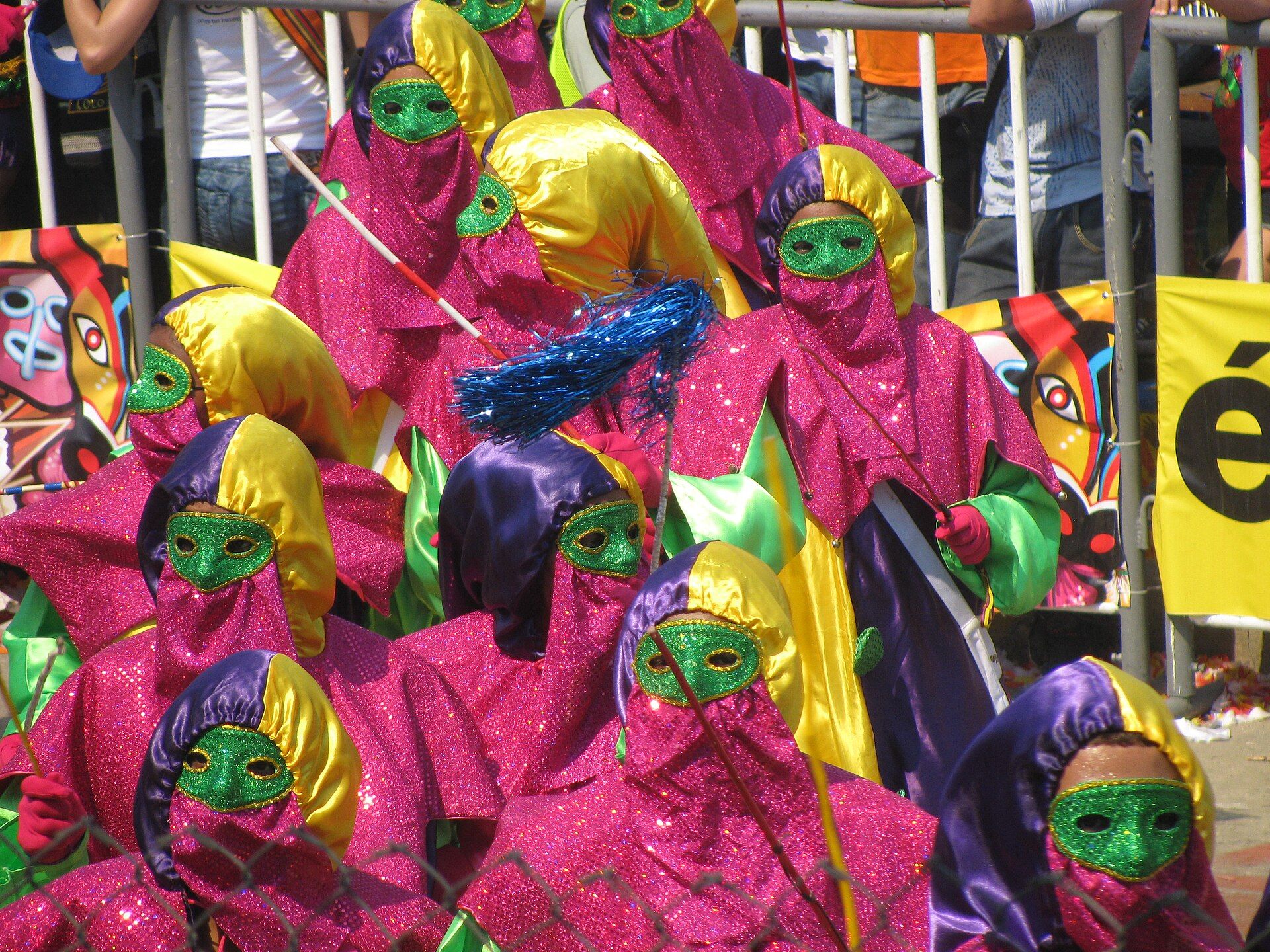
- Sunday, Gran Parada de Tradición y Folclor. Folk groups and traditional comparsas march without floats. This is the day to see cumbia, congo and the dances UNESCO recognises up close.
- Monday, Gran Parada de Comparsas. More fantasy and more choreography. That night comes the Festival de Orquestas y Acordeones, which runs into the early hours of Tuesday.
- Tuesday, burial of Joselito Carnaval. The finale is a mock funeral: the character who personifies the party "dies" and his "widows" mourn him in the street so the city can return to normal.
There are events before Saturday worth knowing about. The Guacherna, a night parade of lanterns and drums, is usually held on the second-to-last Friday before carnival, which points to around 29 January. The Carnaval de los Niños takes place the weekend before. Confirm both in the official agenda.
Why is it a UNESCO heritage event?
UNESCO proclaimed it a Masterpiece of the Oral and Intangible Heritage of Humanity in 2003 and inscribed it on the Representative List of the Intangible Cultural Heritage of Humanity in 2008. The value lies in the mix: dances of European, African and Indigenous origin, cumbia, puya and porro music, drums and handmade masks, and a lot of political satire.
That changes how you experience it. It is not only a party: if you come curious about the dances and comparsas, you will enjoy it a lot more.
What is a palco, and do you need one?
The parades run along Vía 40, and much of the route has palcos: grandstands or chairs with reserved seats. In 2026 the official ticketing platform (TuBoleta) listed parades on Vía 40 between calles 80 and 58, starting at 11:00 a.m. on Saturday and at noon on Sunday and Monday, with no food or drink allowed into the palcos. For 2027, treat those details as a reference until they are announced.
2026 prices varied widely by zone and reseller, so we are not quoting figures. The key point: buy only through the official ticketing platform or authorised outlets, and be wary of last-minute offers on social media. You can watch without a palco, but from street level, standing in strong sun among a big crowd.
Where to stay: Barranquilla, Cartagena or Santa Marta?
Be realistic here. Barranquilla fills up for carnival and hotel prices climb, so visitors from abroad often look for a base in another city. Cartagena and Santa Marta are close, but the trip is not trivial in the middle of a festival.
- From Cartagena: roughly 120 km by road. Bus search sites put the trip at 2 to 3 hours with many daily departures; times vary by company and traffic.
- From Santa Marta: roughly 100 to 105 km, and the bus takes around 2 hours depending on the company and the schedule.
Parades start around midday, run through the afternoon, and the party continues at night. If you stay in Cartagena or Santa Marta, take an early bus and arrange your return in advance (a privately booked ride, not an improvised one), especially on Monday, when the orchestra festival runs until dawn. Do not assume there will be a cheap taxi at the hour you want.
One combination that works: sleep Saturday night in Barranquilla (book months ahead) for the Batalla de Flores, then head back to the coast on Sunday or Monday. Or the reverse: stay comfortably in Bocagrande, Cartagena, or in Santa Marta, and make a single day trip for the Gran Parada de Tradición, the most folkloric of the parades.
Building the trip: Cartagena, Santa Marta and the carnival
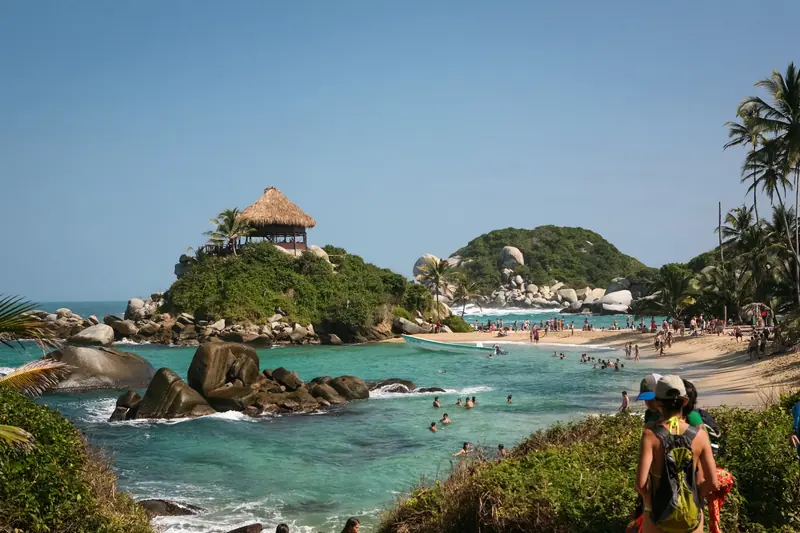
Carnival falls in the middle of Caribbean high season, right after the Hay Festival Cartagena (28 to 31 January 2027). It makes sense to combine them: a few days in Cartagena for the Old City and the beach, then Barranquilla for carnival. You can close in Santa Marta, with Minca or Tayrona National Park.
One practical point: book apartments and flights early. 77Rentals has apartments in Bocagrande and El Laguito in Cartagena, and in Santa Marta, handy as a calm base between parade days.
Quick questions
Is it safe to go?
It is a massive event, so the usual care applies: watch your phone and wallet, use the palcos and formal transport, and do not separate from your group at night. Check your own country's travel advice before you go.
Do I need a costume?
No. Costumes belong to the groups that march. As a spectator, light clothes, comfortable shoes and willingness to dance are enough.
What should I eat?
Barranquilla is known for butifarra, costeño cheese, arepa de huevo and fried snacks, but we have not confirmed an official list of carnival food stalls or dishes, so ask locals where to eat.