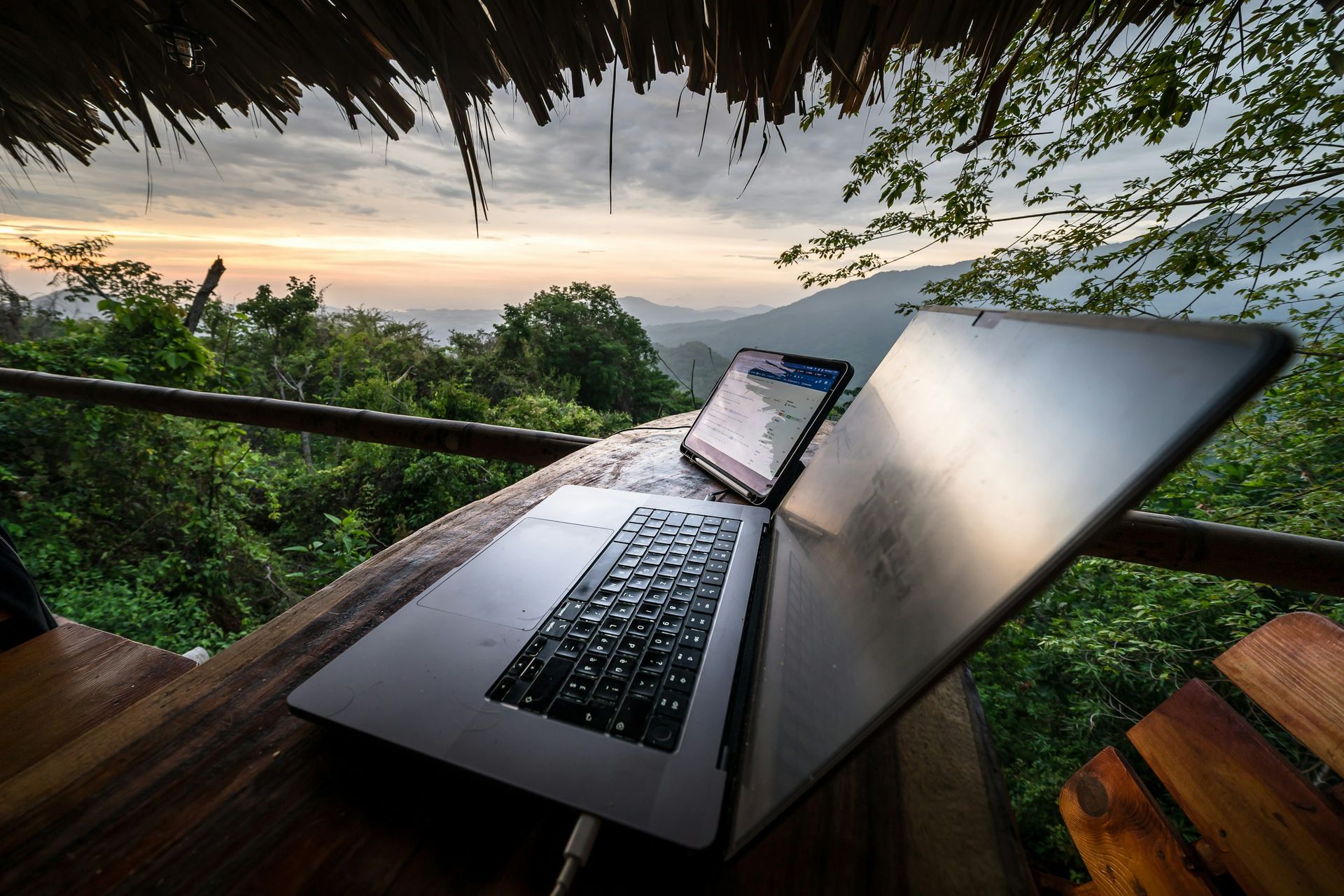
For a month of remote work in Colombia you rarely need a visa, but you should understand the 180-day rule, when the digital nomad visa makes sense, and what to check in an apartment before you book.
More and more people land in Colombia with a laptop in their bag: they work mornings for a company back home and spend the afternoon wandering Getsemaní or watching the sunset over El Rodadero. If you are thinking about a month here, the good news is that for most passports it takes no special paperwork at all.
There are still a few rules worth knowing before you buy the ticket: how long the tourist permit lets you stay, when you actually need the digital nomad visa, and what happens with tax if you fall for the place and stay longer. Everything below comes from Colombia's foreign ministry (Cancillería), Migración Colombia and the tax authority (DIAN), current as of November 2026.
Do I need a visa to work remotely in Colombia for a month?
If your passport is from a country that is visa-exempt for short stays (the US, Canada, the UK and the EU, among many others), usually not. The same rule that created the digital nomad visa, Cancillería's Resolution 5477 of 2022, says digital nomads and remote workers of those nationalities can enter without a visa, on the entry permit Migración Colombia grants at the airport.
There are two conditions: your stay must not generate payments from Colombian companies, and it must not run past 90 days, extendable to a maximum of 180 days per calendar year. Put simply: if your employer or clients are abroad and pay you from abroad, a month working from Cartagena fits comfortably inside the tourist permit.
If you hold another passport, check Cancillería's site to see whether your nationality needs a visa, since the list changes by resolution. And remember the Check-MIG form before you fly; our Colombia travel tips explain how to fill it in on the official site.
How does the 180-day rule work?
According to Migración Colombia, the tourist permit is granted for up to 90 days and can be extended by another 90, never exceeding 180 days between 1 January and 31 December. That is a calendar year, not a rolling 12 months, which has a practical side effect: arrive in October and stay until February, and some of your days count toward one year and the rest toward the next.
The immigration officer decides how many days you get on arrival, so check your entry record before you leave the airport. If you want to stay longer than you were given:
- Apply online using Migración Colombia's e-FUT form and choosing "Permiso Temporal de Permanencia para Prorrogar Permanencia" (the extension permit).
- Do it in time: Migración asks you to file no later than 5 business days before your current permit expires. Miss that and you are in the country irregularly.
- It costs money: the extension fee for the general public is COP 150,000 in 2026, under Migración Colombia's Resolution 0599 of 2026. Some nationalities are exempt, so check the current fee table first.
- Once you hit 180 days in the year, there are no more extensions; staying on requires a visa.
What does the Colombia digital nomad visa require?
If you plan to stay more than six months, there is the V digital nomad visa, set out in article 46 of Resolution 5477 of 2022. It covers working from Colombia over the internet exclusively for foreign companies, as an employee or freelancer, or starting a digital business. It lasts up to two years. These are the specific requirements in the rule:
- A passport from a country that is visa-exempt for short stays.
- A letter from your foreign employer (or several clients), in Spanish or English, stating the type of relationship and how you are paid. Attach the contract if you have one. Proof that you are a partner in a company abroad and work for it remotely also counts.
- Bank statements for the last 3 months showing income of at least three Colombian monthly minimum wages.
- Health insurance valid in Colombia covering accident, illness, maternity, disability, hospitalisation, death or repatriation for your whole planned stay.
- For entrepreneurs, a letter explaining your project and the resources behind it.
The 2026 monthly minimum wage is COP 1,750,905 under Decree 0159 of 2026, so three minimum wages come to COP 5,252,715 a month. Bear in mind the minimum wage is reset every year, usually by decree in December, so the 2027 figure will be different. Run the numbers with the minimum wage for the year you apply.
The visa can include dependants (a partner or children, for example), but it does not let you work for or bill people or companies based in Colombia. You apply through Cancillería's online visa platform, and the fee depends on your nationality, so check the current rate on cancilleria.gov.co before paying. Colombia's Ministry of Justice warns in its guide to the process that mistakes on the form can get the application rejected, and the fee is not refunded.
What about tax if I stay longer?
For a single month, none of this applies to you. But if you start stringing stays together, know that DIAN treats you as a tax resident once you spend more than 183 calendar days in Colombia (in one stretch or several, counting arrival and departure days) within any 365-day period. Tax residents declare their worldwide income in Colombia.
Note that this count works differently from Migración's: it is any rolling 365 days, not the calendar year. If you plan to spend much of the year in Colombia, talk to an accountant before you get close; whether your home country has a double tax treaty with Colombia matters too.
Cartagena, Santa Marta or Bogotá for a working month?
All three work, but they make for very different months:
- Cartagena: hot and humid all year, so air conditioning is a work tool, not a luxury. The payoff: you close the laptop and you are minutes from the beach or the old walled city. Bocagrande and El Laguito put you by the sea with supermarkets close by.
- Santa Marta: a good base if you want to mix work with nature. Minca, up in the Sierra Nevada, is a short trip from the city, and so is Tayrona National Park; just check the park's annual closures before you plan your weekends.
- Bogotá: cool weather that suits long work days, neighbourhoods like Chapinero and Usaquén full of cafés, and the same time zone as the coast. Take your first day easy because of the altitude; our surprising facts about Colombia post has more on that.
What should I check in an apartment before booking a month?
A lovely holiday apartment is not always a good place to work. Before you pay, ask for:
- A recent internet speed test run inside the apartment. A screenshot is worth more than the word "wifi" in a listing.
- Where you will actually work: a desk or dining table, a decent chair and good light. On the coast, make sure the work area has air conditioning.
- A backup connection: a Colombian SIM with data you can hotspot from your phone if the internet drops mid-call.
- The dates: from mid-December to mid-January, over Semana Santa (21 to 28 March in 2027) and on holiday weekends, the coast fills up and prices climb. If you can choose, a month outside those dates is calmer.
- The National Tourism Registry (RNT) number: every legal tourist rental in Colombia must have one. Ask for it.
77Rentals has apartments in Bocagrande, El Laguito, Santa Marta and Bogotá. Tell us you are coming to work and we will point you to the one with the best desk setup and connection for your dates. Browse the apartments or message us on WhatsApp.