Visa rules, the Check-MIG form, money, safety and weather in Cartagena, Santa Marta and Bogotá: the practical things we wish every first-time visitor knew before landing in Colombia.
Do I need a visa for Colombia?
If you hold a passport from the US, Canada, the UK or any EU/Schengen country, you don't need a tourist visa. The immigration officer usually stamps you in for up to 90 days, although the exact number is at their discretion. You can stay a maximum of 180 days in any 12-month period, and extensions are possible.
Officers can ask for two things: proof of an onward or return ticket within those 90 days, and a passport valid for your whole stay. Six months of validity is the safe bet, since some airlines check it at boarding.
Canadians pay a reciprocity entry fee on arrival, in place since November 2023. The amount is updated every year, so check Travel.gc.ca before you fly. Children under 14, travelers over 79 and visitors going only to San Andrés are exempt.
Travelling on another passport? Check Colombia's foreign ministry (Cancillería) site, because requirements vary by nationality.
What is Check-MIG and do I have to fill it in?
Check-MIG is Migración Colombia's online pre-registration form. Fill it in: it's free, takes a few minutes, and some airlines ask for it before letting you board. You submit it between 72 hours and 1 hour before your flight, once when you arrive and again when you leave.
Use only the official site, apps.migracioncolombia.gov.co/pre-registro. Search results are full of look-alike pages that charge a “processing fee” for the same free form. If a site asks for your card number, close it.
Colombia's departure tax is usually included in your airfare, so you normally won't pay anything extra at the airport.
What money should I bring, and are cards accepted?
The currency is the Colombian peso (COP). As of September 2026, one US dollar buys a little over 3,000 pesos, after a strong year for the peso. Rates move daily, so check the official rate (the TRM) on the Banco de la República site before you exchange.
Cards work in most restaurants, supermarkets and shops in Cartagena, Santa Marta and Bogotá. Carry cash for street food, taxis, beach vendors, markets and small towns, where card machines are often missing.
- Use ATMs inside malls or bank branches, not standalone machines on the street.
- Expect a per-withdrawal fee on foreign cards, so take out larger amounts less often.
- Choose to be charged in pesos. When the ATM or card machine offers to convert to your home currency, decline. That conversion rate is almost always worse.
- Keep small bills. A 100,000-peso note is hard to break at a fruit stand.
Do you tip in Colombia?
In restaurants, a 2018 law (Ley 1935) lets places suggest a voluntary tip of up to 10%, listed on the bill as “servicio” or “propina voluntaria”. It is optional, and staff must ask whether you want it included. Beyond that, rounding up a taxi fare or leaving a few thousand pesos for a tour guide is appreciated, not expected.
One more money tip: foreign tourists can claim back VAT (IVA) on qualifying purchases of goods such as clothing, crafts, jewelry, emeralds and electronics. Keep your invoices and file with DIAN, the tax authority, before you leave the country. Its website lists the current rules and minimums.
What is the best way to get around Colombia?
Fly between regions. Distances look short on the map, but the Andes make roads slow: Bogotá to the Caribbean coast by bus takes 18 to 20 hours or more. A flight from Bogotá to Cartagena or Santa Marta takes about an hour and a half.
Avianca is the largest domestic airline, and LATAM, JetSMART and Wingo also fly the main routes. If an older guide mentions Viva Air or Ultra Air, ignore it: neither flies anymore.
Between Cartagena and Santa Marta, go by road. The drive takes about 4 hours, longer with traffic around Barranquilla and Ciénaga. Shuttle companies such as Marsol (door-to-door in some areas) and Berlinastur make it easy.
In cities, don't hail taxis on the street. Use an app, a taxi booked by your hotel or host, or the official taxi line at the airport. Uber, DiDi and InDrive are widely used, but not formally regulated.
When is the best time to visit Colombia?
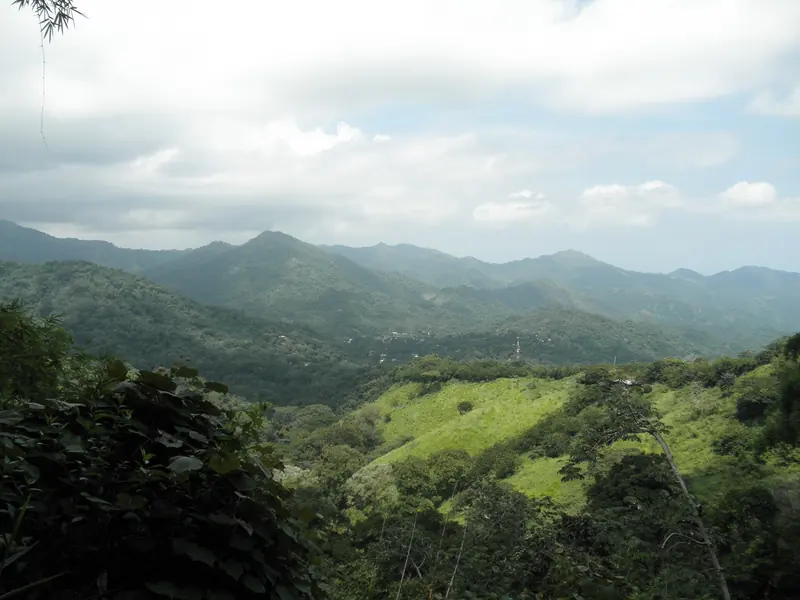
Colombia sits close to the equator, so the weather depends more on altitude than on the season. Broadly, the driest months are December to March, with a shorter dry spell in the middle of the year. April and May, and October and November, are the rainiest, which you'll notice most in the Andes. El Niño and La Niña years can shift these patterns.
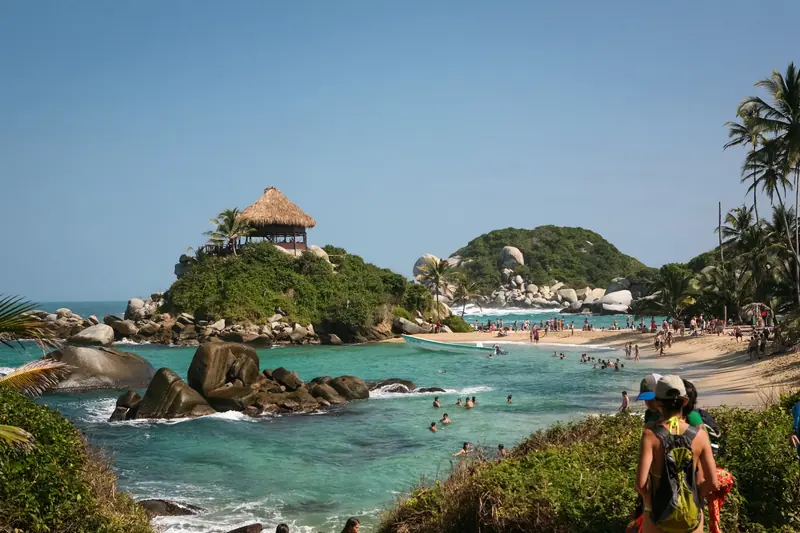
Cartagena and Santa Marta are hot all year, around 28–32 °C, and humid. December to March brings the driest, breeziest days. Plan sightseeing on foot for early morning and late afternoon, and keep midday for the pool or the beach.
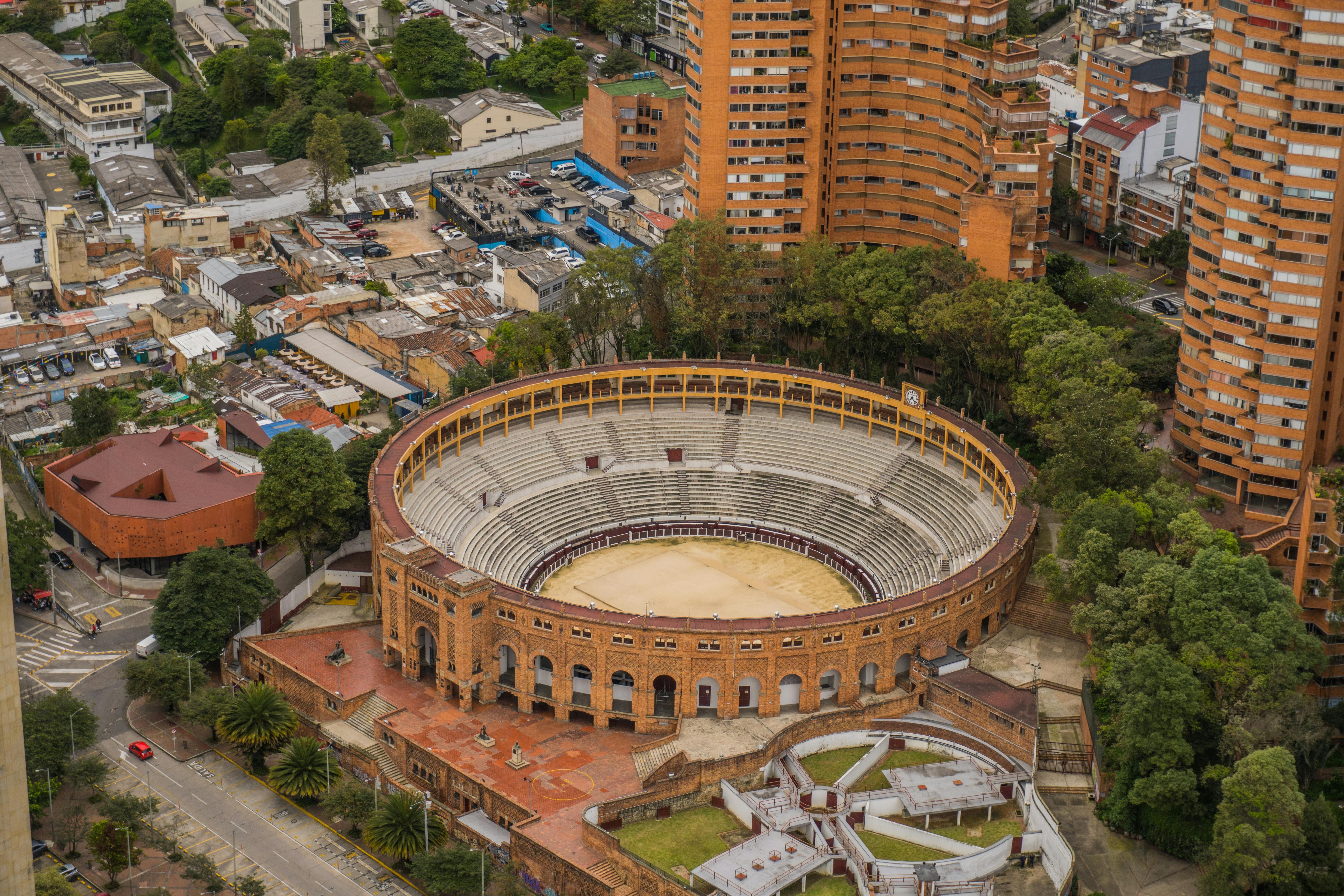
Bogotá sits at about 2,600 m and runs cool, around 7–19 °C, with weather that changes several times a day. Pack layers and a rain jacket, even if you're heading to the coast afterwards.
High season means higher prices and fuller flights: mid-December to mid-January, Semana Santa (Holy Week), mid-June to mid-July when Colombian schools are out, and the long weekends Colombians call “puentes festivos”.
Is Colombia safe for tourists?
The trouble travelers run into tends to follow the same few patterns, and nearly all of it is avoidable. Check your government's travel advisory before you go, then follow the rule Colombians repeat to each other: no dar papaya. Literally “don't give papaya”, it means don't make yourself an easy target.
- Keep your phone out of sight near the curb. Snatch thefts from motorbikes happen on busy streets. Step into a shop or away from the road to check your map.
- Carry a copy of your passport, not the original. Leave the original where you're staying.
- Never leave a drink unattended, and don't accept drinks or anything else from strangers. Scopolamine, a drug used to sedate and rob people, is a real risk in nightlife areas.
- Be careful with dating apps. Canada's travel advice specifically warns about dates that end in drugging and robbery. Meet in busy public places and don't bring a date back to where you're staying.
- Use app or pre-booked taxis, especially at night.
Vendors in Cartagena's walled city and on the beaches can be persistent. A firm, friendly “no, gracias” and walking on is enough.
Can you drink the tap water in Colombia?
In Bogotá, yes: the city's tap water meets drinking-water standards. On the Caribbean coast, stick to bottled or filtered water.
Do I need a yellow fever vaccine for Colombia?
Not to enter the country. But since April 2025, Parques Nacionales has been asking visitors for a yellow fever vaccination card at some national parks, including Tayrona and the Sierra Nevada de Santa Marta. If a park is on your list, check the current rule with Parques Nacionales before you go, and get the vaccine at least 10 days before your visit.
What plugs does Colombia use?
Type A and B plugs at 110 V, 60 Hz, the same as the US and Canada. Travelers from the UK and Europe need an adapter. Most phone and laptop chargers handle 100–240 V, so a voltage converter usually isn't necessary.
SIM cards, eSIM and WhatsApp
The easiest option is a travel eSIM set up before you fly. If you prefer a local SIM, Claro has the best coverage, with Movistar, Tigo and WOM as alternatives. You can buy one at kiosks in Bogotá's El Dorado airport. Bring your passport, because it's required.
Install WhatsApp if you don't have it. It's how Colombia communicates: your host, restaurants and tour operators will all message you there.
Useful Spanish phrases for Colombia
Outside tourist areas, less English is spoken. A handful of phrases goes a long way, and a “buenos días” before any question is always well received.
- ¿Cuánto cuesta? How much is it?
- La cuenta, por favor. The bill, please.
- ¿Me regala…? Literally “will you gift me…?”, it's the everyday Colombian way to ask for something politely: “¿Me regala un tinto?” means “Could I have a small black coffee?”
- ¿Dónde queda…? Where is…?
- Con gusto. “With pleasure”, the standard reply to “gracias”.
Why does my host in Colombia ask for my passport?
Every legal tourist rental in Colombia must hold an RNT (Registro Nacional de Turismo), and booking platforms have to display it. Look for the number in the listing: it's a quick way to tell a legal rental from an informal one.
All lodging providers, from hotels to Airbnb hosts, must also report foreign guests' check-in and check-out to Migración Colombia through a system called SIRE, and hosts who don't can be fined. That's why hosts like 77Rentals ask for your passport details and a photo of your entry stamp. It's a legal requirement, not extra paperwork.
If a host never asks, take note: it may be a sign the rental isn't registered.
Still have questions about your trip? Browse our apartments in Cartagena, Santa Marta and Bogotá, or message our team on WhatsApp. We're happy to help, even if you're still deciding where to stay.