Tayrona is the best-known park on the coast, but its rules keep changing: annual closures, restricted sectors and seasonal fees. Here is what is confirmed and what you should verify before you go.
Tayrona National Natural Park is the most searched nature trip from Santa Marta, and one of the ones that changes most from year to year. In 2026 it had its usual ritual closures and also a long closure in February after heavy rain and security problems. If you are reading a 2023 or 2024 guide, something in it has probably gone out of date.
This guide separates what official documents back up from what only private guides report. Where we could not confirm a figure, we say so. And because the park can close sectors at short notice, the last word always belongs to Parques Nacionales Naturales de Colombia.
When is Tayrona closed?
There are three scheduled pauses a year, tied to spiritual periods of the Indigenous peoples of the Sierra Nevada. In 2026, according to press coverage citing the official dates, they were:
- 1 to 15 February
- 1 to 15 June, which Publimetro describes as part of the "Respira Tayrona" strategy, with ceremonies led by the Kogui, Wiwa, Arhuaco and Kankuamo peoples
- 19 October to 2 November
If you are reading this in early November 2026, the park reopens to the public on 3 November based on those dates. We found no official 2027 calendar, so the three-pause pattern is a reference, not a promise. Check the Parques Nacionales site before you book flights or lodging.
What happened in February 2026
On top of the ritual pause, the park was closed for almost three weeks. Resolution 091 of 17 February 2026 ordered a full closure for public-risk conditions, and Resolution 112 of 4 March, which ordered the reopening from 5 March, gives two reasons: damage from a cold front with very intense rain, and a deterioration in security and governance after an incident in the Cañaveral sector.
The reopening came with conditions. Under that resolution, the Kogui Trail (the Cañaveral to Cabo San Juan stretch) stayed closed to the public until repairs were finished, and access to Bahía Concha was limited to pedestrians and light electric motor-carts while the access road was fixed. The Cangrejal Trail was usable, though damaged. Portafolio also reported a Carabineros police post inside the park territory.
That information dates from March. We do not know whether the Kogui Trail has reopened, and the resolution itself leaves room for sector closures if conditions change. Before you plan a hike to Cabo San Juan, confirm which trails are open.
How much is the entrance fee in 2026?
Fees vary by age, nationality, residence and season. Semana, citing Parques Nacionales Resolution 551, reports these 2026 figures for foreigners who are not residents or members of the Andean Community:
- Main entrance: 81,000 COP in low season and 96,500 COP in high season.
- Bahía Concha sector: 43,000 COP.
Colombians, residents and Andean Community members pay less, with different amounts by age and season. We left out the full table because the source we checked is ambiguous in several rows. We also could not find the exact high and low season dates, so check the rate in force on the day of your visit. Parking and vehicle fees are charged separately.
Mandatory insurance, tickets and capacity
A specialist guide says every visitor must hold accident insurance from an insurer approved by Parques Nacionales, at around 7,000 COP per person per day, paid to the insurer and not to the park. We found no official source confirming that figure, so treat it as a reference. If you join a group, ask whether insurance is already in the tour price before paying twice.
The same guide makes a useful warning: there is no reservation system that guarantees a spot. Paying online on the official link does not guarantee entry, because each sector sells tickets day by day until it reaches its daily capacity. At the ticket booth you need your original ID or passport. Be wary of anyone selling "official tickets" on the street.
The entrances and their hours
According to that guide, high-season entry hours are roughly as follows (low season differs, and some gates open an hour later):
- El Zaino: 7:00 a.m. to 3:00 p.m., exit by 6:00 p.m.
- Calabazo: 6:00 a.m. to 1:00 p.m., exit by 5:00 p.m.
- Palangana: 7:00 a.m. to 2:00 p.m., exit by 5:00 p.m.
- Bahía Concha: 7:00 a.m. to 2:00 p.m., exit by 6:00 p.m.
These come from a private guide and can change without notice. What is safe to say is that entry closes early, and arriving with the morning ahead of you avoids being turned away.
One day or more?
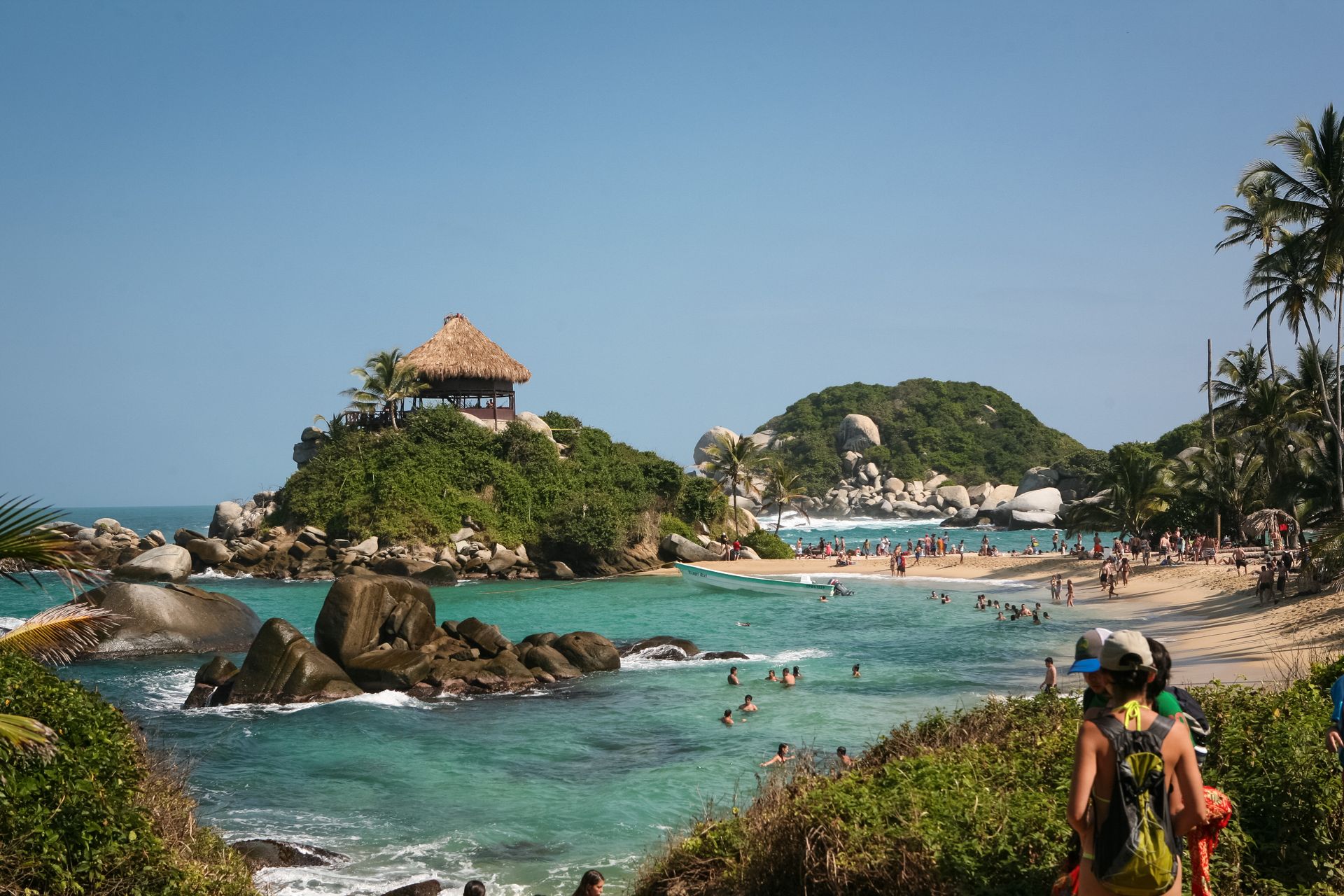
For a simple one-day visit, Bahía Concha is the easiest sector to plan: it has its own entrance and its own fee. The long walks to the beaches at the far end of the park take more time, heat and proper shoes, and with trails still recovering it pays to ask which ones are open. We give no walking or transfer times because we could not verify them in an official source.
If you decide to stay more than a day, remember that tours with lodging inside the park run under the same rules and the same closures. Ask the operator which sectors are included and what happens if the park closes during your trip.
A plan B for a beach day without the park
Because the park can close at short notice, it helps to have a fallback. Santa Marta has beaches and neighbourhoods for a day out without entering Tayrona, and you can head up to Minca from the city. If you are planning the trip, read our Minca guide and the Santa Marta events calendar.
If you want a base on the coast, we have apartments in Santa Marta. Message us on WhatsApp with your dates and we will tell you which area suits your plan.